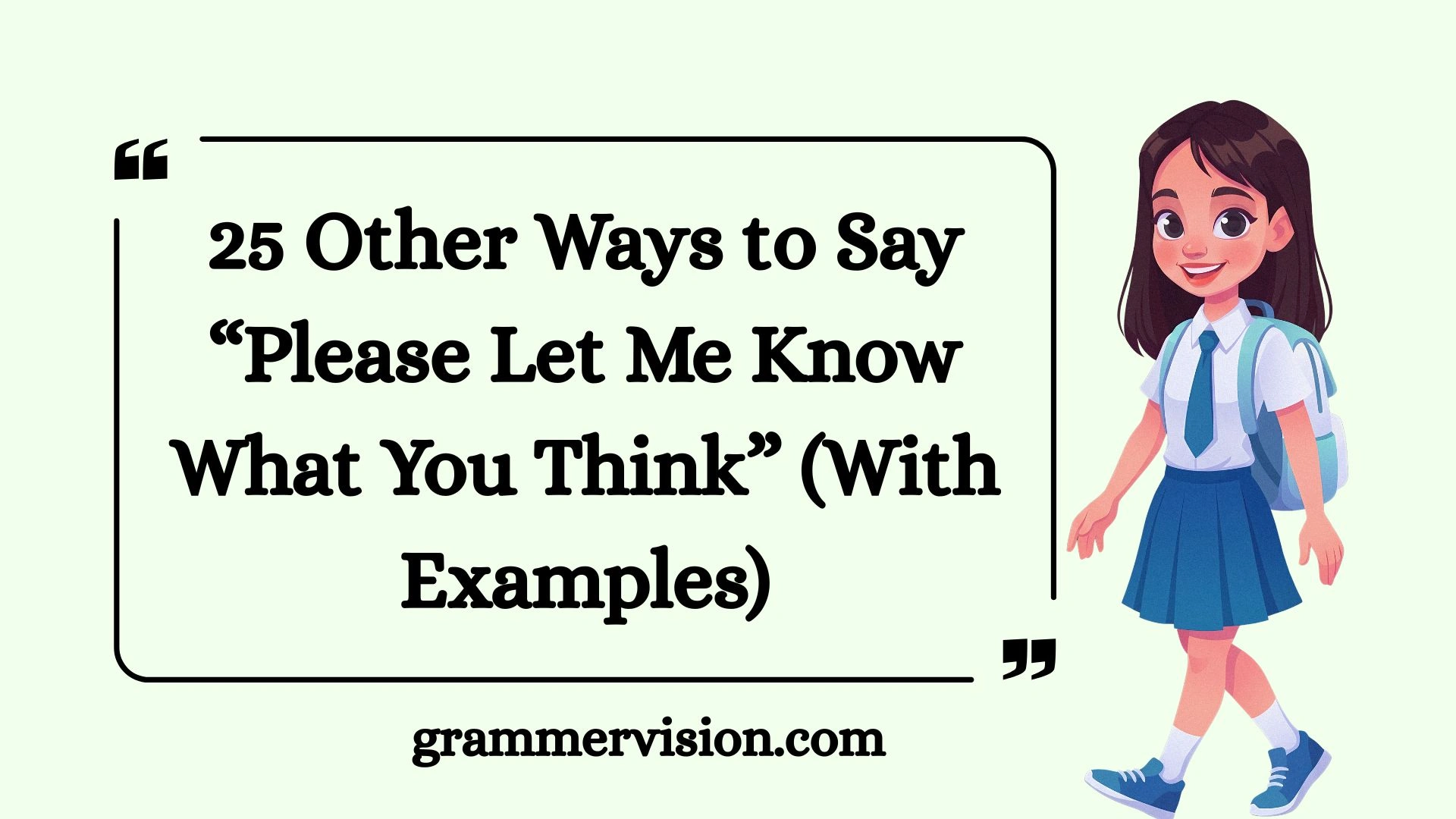
In my experience, finding the right words to request feedback or opinions can truly change how your message makes someone feel. Exploring Other Ways to Say “Please Let Me Know What You Thin” helps you use a thoughtful, considerate, and engaging tone that matters in professional and personal communication. Instead of always saying please, let me know what you think, trying a different phrase can avoid sounding overly formal or dull when repeating it again.
When you focus on clear communication, it truly matters in both writing and everyday English. Many people use the same lines because it works, but learning other ways to say things helps you sound more friendly, natural, and less impersonal. Whether it’s an email, proposal, or casual text, the right tone makes a big difference. This guide helps you find the best option that comes with real examples, so you can write correctly and naturally in business, academic, or daily conversations.
I’ve often seen people staring at a blank screen, trying to figure out how to ask for input without sounding like a broken record. That classic habit can start to feel stale after the hundredth time. But asking is crucial in all settings because it shows value for others and supports growth. By keeping your tone fresh, choosing from the heart, and using a warmer style, you can build a stronger connection and create an inviting atmosphere that encourages collaboration.
What Does “Please Let Me Know What You Think” Mean?
The phrase “Please let me know what you think” is a polite way to ask someone for their feedback, opinion, or thoughts. It shows openness, respect, and willingness to improve based on others’ perspectives.
When to Use “Please Let Me Know What You Think”
You can use this phrase when you want to:
- Get feedback on ideas, work, or decisions
- Show respect for someone’s opinion
- Encourage collaboration and discussion
- Build stronger communication and trust
Pros and Cons of “Please Let Me Know What You Think”
Pros:
- Polite and professional
- Encourages open communication
- Works in both formal and casual settings
Cons:
- Can feel overused or generic
- Lacks emotional warmth sometimes
- May not always feel personal or engaging
Why We Need to Use Alternatives
Using different phrases helps you sound more natural, expressive, and thoughtful. It also helps your message stand out and feel more human and less robotic, especially in emails, chats, or professional conversations.
1. I’d love to hear your thoughts
Scenario: Asking for friendly feedback
Examples:
- Honestly, I’d love to hear your thoughts on this idea today
- Personally, I’d love to hear your thoughts about this proposal soon
- Genuinely, I’d love to hear your thoughts when you review it
- Kindly, I’d love to hear your thoughts before we finalize everything
- Also, I’d love to hear your thoughts on this draft version
Tone: Warm and inviting
Explanation: This phrase feels more personal and sincere, making the other person feel valued. It encourages open sharing without pressure and builds a positive tone in conversations.
When to Use: Use in friendly emails, teamwork discussions, or casual professional chats
2. What are your thoughts on this?
Scenario: Directly asking for an opinion
Examples:
- Hey, what are your thoughts on this new plan for launch
- Now, what are your thoughts on this updated document I shared
- Well, what are your thoughts on this approach for solving issues
- Honestly, what are your thoughts on this design direction overall
- Today, what are your thoughts on this strategy we discussed earlier
Tone: Direct and conversational
Explanation: This phrase is simple and clear, making it easy for the other person to respond. It invites feedback without sounding overly formal or distant.
When to Use: Best for quick chats, emails, or meetings
3. I’d appreciate your feedback
Scenario: Professional request
Examples:
- Kindly, I’d appreciate your feedback on the attached report today
- Honestly, I’d appreciate your feedback before we proceed further
- Also, I’d appreciate your feedback regarding this new workflow plan
- Genuinely, I’d appreciate your feedback after reviewing the proposal
- Quickly, I’d appreciate your feedback so we can finalize everything
Tone: Professional and respectful
Explanation: This phrase shows gratitude and respect, making your request feel polite and considerate. It works well in formal communication settings.
When to Use: Use in work emails, reports, and client communication
4. Let me know your opinion
Scenario: Casual or neutral setting
Examples:
- Just, let me know your opinion about this concept when ready
- Also, let me know your opinion after checking the details carefully
- Honestly, let me know your opinion if anything seems unclear here
- Kindly, let me know your opinion on this suggestion soon
- Today, let me know your opinion regarding this update
Tone: Neutral and simple
Explanation: This phrase is easy to understand and versatile, suitable for many contexts without sounding too formal or too casual.
When to Use: Everyday communication and informal discussions
5. I’d value your input
Scenario: Showing respect
Examples:
- Truly, I’d value your input on this important decision today
- Honestly, I’d value your input regarding this new process change
- Kindly, I’d value your input before moving ahead with the plan
- Also, I’d value your input on this draft version
- Genuinely, I’d value your input about these ideas
Tone: Respectful and appreciative
Explanation: This phrase highlights that the person’s opinion is important and meaningful, strengthening trust and collaboration.
When to Use: Use when speaking to experienced colleagues or leaders
6. I’m interested in your perspective
Scenario: Thoughtful discussion
Examples:
- Honestly, I’m interested in your perspective on this issue today
- Also, I’m interested in your perspective regarding this proposal
- Kindly, I’m interested in your perspective before we finalize
- Genuinely, I’m interested in your perspective about this idea
- Now, I’m interested in your perspective on these changes
Tone: Thoughtful and engaging
Explanation: This phrase shows curiosity and openness, encouraging deeper discussion and meaningful insights.
When to Use: Best for brainstorming or strategic conversations
7. Feel free to share your thoughts
Scenario: Encouraging openness
Examples:
- Please, feel free to share your thoughts whenever you have time
- Honestly, feel free to share your thoughts about this idea
- Also, feel free to share your thoughts without any hesitation
- Kindly, feel free to share your thoughts after reviewing
- Genuinely, feel free to share your thoughts openly here
Tone: Friendly and relaxed
Explanation: This phrase reduces pressure and invites honest and open feedback, making people more comfortable responding.
When to Use: Casual and team-friendly environments
8. I’d love your feedback on this
Scenario: Friendly and warm
Examples:
- Honestly, I’d love your feedback on this concept soon
- Kindly, I’d love your feedback on this document today
- Also, I’d love your feedback on this design
- Genuinely, I’d love your feedback on this idea
- Now, I’d love your feedback on these updates
Tone: Warm and positive
Explanation: This phrase expresses enthusiasm and genuine interest, making your message feel more engaging and human.
When to Use: Friendly emails and collaborative work
9. What do you think about this?
Scenario: Simple question
Examples:
- Hey, what do you think about this plan we created together
- Honestly, what do you think about this updated proposal today
- Also, what do you think about this idea moving forward
- Kindly, what do you think about this change request
- Now, what do you think about this suggestion
Tone: Casual and straightforward
Explanation: A direct and clear way to ask for feedback without sounding formal or complicated.
When to Use: Everyday conversation and quick feedback
10. I’d like your opinion on this
Scenario: Balanced tone
Examples:
- Kindly, I’d like your opinion on this draft before finalizing
- Honestly, I’d like your opinion regarding this proposal today
- Also, I’d like your opinion about these changes
- Genuinely, I’d like your opinion on this matter
- Now, I’d like your opinion on this idea
Tone: Balanced and polite
Explanation: This phrase is professional yet approachable, making it suitable for both formal and informal situations.
When to Use: Workplace emails and discussions
11. Could you share your feedback?
Scenario: Professional request for input
Examples:
- Kindly, could you share your feedback on this report before submission
- Honestly, could you share your feedback after reviewing this proposal
- Also, could you share your feedback regarding the latest updates today
- Genuinely, could you share your feedback on this idea soon
- Now, could you share your feedback so we can improve this
Tone: Polite and professional
Explanation: This phrase sounds formal yet approachable, making it ideal for structured communication. It shows respect while clearly asking for feedback in a professional setting.
When to Use: Use in emails, reports, and workplace communication
12. I’d be grateful for your thoughts
Scenario: Respectful and appreciative
Examples:
- Honestly, I’d be grateful for your thoughts on this matter today
- Kindly, I’d be grateful for your thoughts before making a decision
- Also, I’d be grateful for your thoughts on this proposal
- Genuinely, I’d be grateful for your thoughts regarding this idea
- Now, I’d be grateful for your thoughts after reviewing
Tone: Grateful and respectful
Explanation: This phrase adds a sense of appreciation and humility, making the other person feel valued and respected.
When to Use: Best for formal or senior-level communication
Read More.25 Other Ways to Say ‘Quick Learner’ on a Resume (With Examples)
13. Let me know how this looks to you
Scenario: Reviewing work
Examples:
- Kindly, let me know how this looks to you before final approval
- Honestly, let me know how this looks to you after edits
- Also, let me know how this looks to you for improvements
- Genuinely, let me know how this looks to you today
- Now, let me know how this looks to you overall
Tone: Friendly and practical
Explanation: This phrase focuses on review and improvement, making it perfect when sharing drafts or progress updates.
When to Use: Use for documents, designs, or drafts
14. Any feedback would be appreciated
Scenario: Open request
Examples:
- Honestly, any feedback would be appreciated on this new idea
- Kindly, any feedback would be appreciated before final submission
- Also, any feedback would be appreciated regarding this plan
- Genuinely, any feedback would be appreciated after review
- Now, any feedback would be appreciated for improvements
Tone: Open and humble
Explanation: This phrase invites all types of feedback, making it inclusive and encouraging responses without pressure.
When to Use: When you want broad input from multiple people
15. I’d welcome your input
Scenario: Encouraging collaboration
Examples:
- Honestly, I’d welcome your input on this discussion topic today
- Kindly, I’d welcome your input before making changes
- Also, I’d welcome your input regarding this issue
- Genuinely, I’d welcome your input on this proposal
- Now, I’d welcome your input for better decisions
Tone: Collaborative and respectful
Explanation: This phrase promotes teamwork and shared decision-making, making others feel involved.
When to Use: Team projects and group discussions
16. Please share your perspective
Scenario: Thoughtful feedback
Examples:
- Kindly, please share your perspective on this matter today
- Honestly, please share your perspective regarding this idea
- Also, please share your perspective after reviewing
- Genuinely, please share your perspective on this change
- Now, please share your perspective for clarity
Tone: Thoughtful and respectful
Explanation: This phrase emphasizes unique viewpoints, encouraging deeper and meaningful responses.
When to Use: Strategic discussions and important decisions
17. I’m open to your feedback
Scenario: Showing openness
Examples:
- Honestly, I’m open to your feedback on this concept today
- Kindly, I’m open to your feedback regarding this proposal
- Also, I’m open to your feedback for improvements
- Genuinely, I’m open to your feedback on this plan
- Now, I’m open to your feedback anytime
Tone: Open and flexible
Explanation: This phrase shows willingness to listen and improve, building trust and transparency.
When to Use: When encouraging honest opinions
18. Your thoughts would mean a lot
Scenario: Emotional connection
Examples:
- Honestly, your thoughts would mean a lot on this idea
- Kindly, your thoughts would mean a lot before deciding
- Also, your thoughts would mean a lot on this plan
- Genuinely, your thoughts would mean a lot to me
- Now, your thoughts would mean a lot here
Tone: Warm and heartfelt
Explanation: This phrase adds emotional value, making the request feel personal and meaningful.
When to Use: Close colleagues or personal communication
19. I’d appreciate your insights
Scenario: Professional insight
Examples:
- Kindly, I’d appreciate your insights on this report today
- Honestly, I’d appreciate your insights before proceeding
- Also, I’d appreciate your insights on this idea
- Genuinely, I’d appreciate your insights regarding this matter
- Now, I’d appreciate your insights for improvement
Tone: Professional and thoughtful
Explanation: This phrase highlights the value of expert opinions and deeper understanding.
When to Use: Expert advice and decision-making discussions
20. What’s your take on this?
Scenario: Casual discussion
Examples:
- Hey, what’s your take on this idea we discussed earlier
- Honestly, what’s your take on this plan today
- Also, what’s your take on this update
- Kindly, what’s your take on this suggestion
- Now, what’s your take on this
Tone: Casual and engaging
Explanation: This phrase feels informal and conversational, making it easy to respond.
When to Use: Informal chats and friendly conversations
21. I’d love to know your view
Scenario: Friendly curiosity
Examples:
- Honestly, I’d love to know your view on this idea
- Kindly, I’d love to know your view before proceeding
- Also, I’d love to know your view on this plan
- Genuinely, I’d love to know your view regarding this
- Now, I’d love to know your view here
Tone: Warm and curious
Explanation: This phrase shows interest and appreciation, encouraging honest responses.
When to Use: Friendly and semi-formal settings
22. Do you have any suggestions?
Scenario: Improvement focus
Examples:
- Honestly, do you have any suggestions for improving this plan
- Kindly, do you have any suggestions before finalizing
- Also, do you have any suggestions regarding this idea
- Genuinely, do you have any suggestions here
- Now, do you have any suggestions for changes
Tone: Constructive and direct
Explanation: This phrase focuses on solutions and improvements, making feedback more actionable.
When to Use: When refining work or problem-solving
23. I’m curious about your thoughts
Scenario: Light and engaging
Examples:
- Honestly, I’m curious about your thoughts on this idea
- Kindly, I’m curious about your thoughts before deciding
- Also, I’m curious about your thoughts here
- Genuinely, I’m curious about your thoughts on this plan
- Now, I’m curious about your thoughts today
Tone: Curious and friendly
Explanation: This phrase shows interest without pressure, encouraging relaxed and honest feedback.
When to Use: Informal or semi-formal discussions
24. Please feel free to comment
Scenario: Open invitation
Examples:
- Kindly, please feel free to comment on this document
- Honestly, please feel free to comment anytime
- Also, please feel free to comment on this idea
- Genuinely, please feel free to comment here
- Now, please feel free to comment for improvements
Tone: Open and inviting
Explanation: This phrase creates a safe space for feedback, encouraging open participation.
When to Use: Group discussions and shared documents
25. Let me know your honest opinion
Scenario: Honest feedback
Examples:
- Honestly, let me know your honest opinion on this idea
- Kindly, let me know your honest opinion before finalizing
- Also, let me know your honest opinion here
- Genuinely, let me know your honest opinion on this plan
- Now, let me know your honest opinion today
Tone: Direct and sincere
Explanation: This phrase encourages honesty and transparency, helping you receive genuine feedback.
When to Use: When you need truthful and constructive opinions
Quick Comparison Table
| Phrase | Tone | Best For | Avoid In |
| I’d love to hear your thoughts | Warm | Friendly emails | Very formal reports |
| I’d appreciate your feedback | Professional | Work emails | Casual chats |
| What do you think? | Casual | Quick talks | Formal writing |
| I’d value your input | Respectful | Senior feedback | Informal texting |
| Feel free to share your thoughts | Relaxed | Team chats | Urgent requests |
FAQs
Q1: What are some simple alternatives to “Please let me know what you think”?
You can use phrases like “I’d love your feedback,” “Share your thoughts,” or “Let me know your opinion.” These alternatives sound friendly and professional.
Q2: How can I sound more personal when asking for input?
Focus on a warmer, considerate, and thoughtful tone. Try “I’m curious about your perspective” or “Your insight would be really helpful.”
Q3: Are there professional ways to ask for feedback in emails?
Yes, phrases like “I’d appreciate your review” or “Could you provide your input?” work perfectly in business emails or client communication.
Q4: How do I avoid sounding repetitive?
Instead of repeating the same phrase, choose other words or alternatives. Learning different ways to ask keeps your messages fresh and engaging.
Q5: Can casual messages use these alternatives too?
Absolutely. Whether it’s a text, email, or proposal, friendly and natural phrases like “What do you think?” or “Your thoughts?” fit everyday situations.
Conclusion
Using Other Ways to Say “Please Let Me Know What You Think” helps you communicate more effectively, confidently, and considerately. Choosing the right words creates a stronger connection and shows respect for others’ opinions.
By focusing on a clear, warm, and thoughtful tone, whether in professional or personal communication, your messages become more engaging and meaningful. Always explore different phrases, alternatives, and examples to keep your feedback requests fresh and inviting.