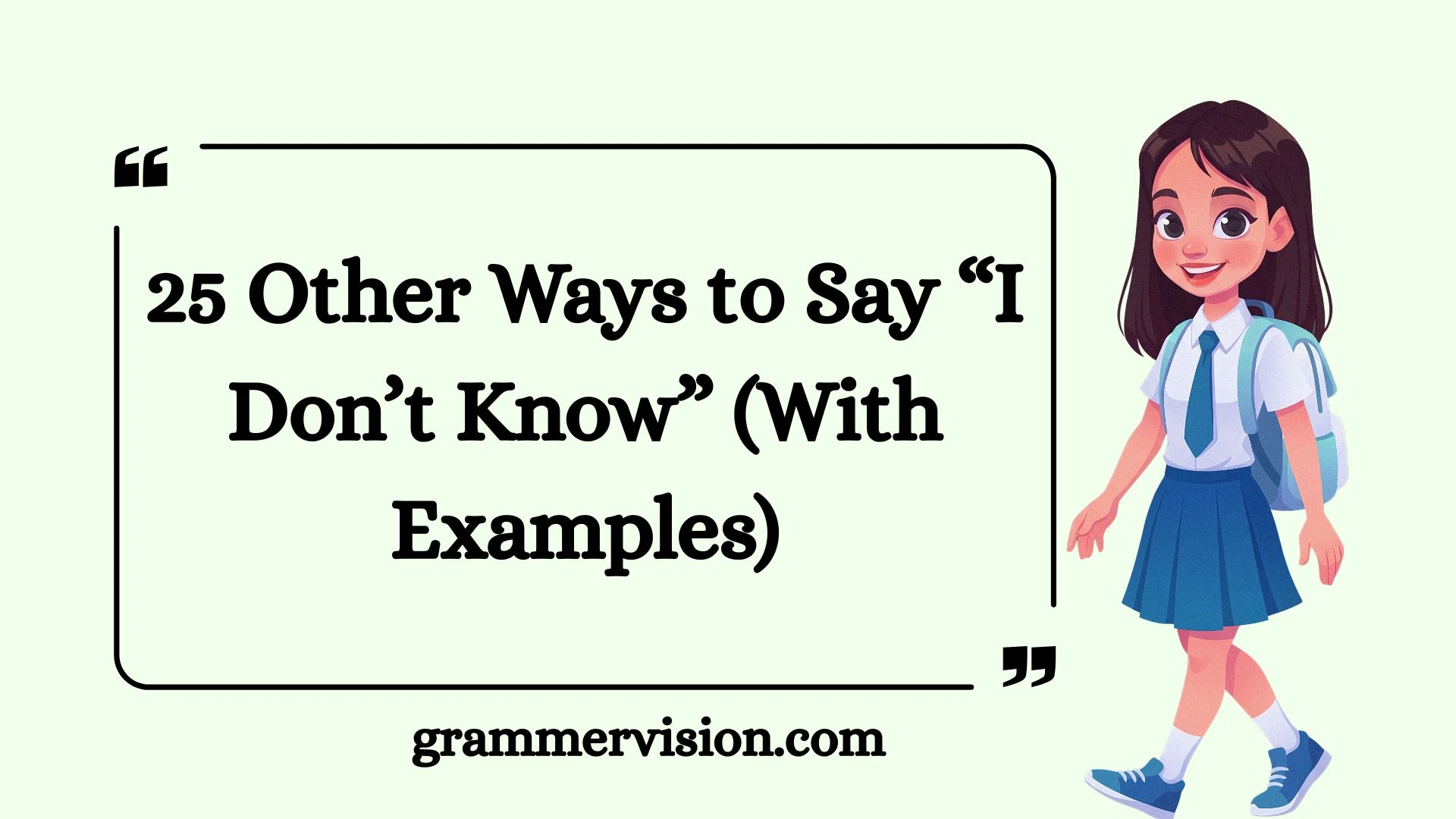
Today We get why admitting I don’t know can feel tough—Other Ways to Say “I Don’t Know” help reduce pressure and sound more natural.
In real life, it often happened at work when a colleague asks a question you SHOULD know the answer, and in that moment your heart stops while you search your brain for a better way to say it. The truth is, saying it directly may sound unprofessional or embarrassing, especially in workplaces where people face pressure and expectation for quick, definitive answers. As Rachel Marmor, LMHC, licensed mental health counselor and chief wellness officer at PAIRS Foundation explains, Leaders often fear saying this could undermine their authority, while in interpersonal relationships, we may worry it could disappoint or lose connection with loved ones, making us feel looking weak or showing vulnerability, even when acting with love and care.
That’s why it’s important to learn ways to say things differently in English. You can boost your vocabulary with new words and phrases, avoid repetition, and explore different ways to sound like a native speaker. I’ve seen how using small alternatives can remove stress and worry, especially when you have no idea about a particular query. The good news is native speakers face the SAME problems, so you’re not alone. Instead of freezing, use a helpful article, or Listen to a podcast like Speak Better English with Harry, or watch lessons on YouTube such as Learn English or englishcla to develop better ways naturally.
What Does “I Don’t Know” Mean?
“I don’t know” means you do not have the answer, the information, or the certainty someone is asking for. It is one of the most direct ways to show uncertainty.
In daily life, people use it in many ways. Sometimes it sounds neutral. Sometimes it can sound blunt. That is why learning softer or more thoughtful alternatives can help you communicate better.
When to Use “I Don’t Know”
Use “I don’t know” when you want to be honest, clear, and straightforward. It works well in casual chats, quick replies, and moments when a short answer is enough.
It can also help when you want to avoid guessing. In work, school, or personal conversations, honesty is often better than saying something uncertain as fact.
Pros and Cons of Saying “I Don’t Know”
Pros
- It is honest
- It is simple
- It avoids false information
- It saves time
Cons
- It can sound too blunt
- It may feel cold in sensitive conversations
- It does not always show effort
- It can end the conversation too quickly
Why We Need to Use “I Don’t Know” Alternatives
Using alternatives helps you sound more polite, supportive, and emotionally aware. Not every moment needs a direct answer.
Sometimes people want comfort, not just information. A softer phrase can show that you are listening, thinking, or willing to help. That small change can make your message feel more personal and meaningful.
1. I’m not sure
Scenario: Use this when you know something might be true, but you are not fully confident.
Examples:
- Honestly, I’m not sure, but I can check and get back to you.
- Maybe I’m not sure, since I have not seen the full details.
- For now, I’m not sure, so I do not want to guess.
- Right now, I’m not sure, but I would rather be accurate.
- To be fair, I’m not sure, and I need more context.
Tone: Careful, neutral, and honest.
Explanation: This phrase is one of the easiest ways to soften uncertainty. It sounds calm and respectful without sounding too formal. It also tells the listener you are being thoughtful instead of careless.
When to use: Use it in everyday conversations, quick messages, or work chats when you want to stay honest without sounding harsh.
2. I’m not certain
Scenario: Use this when you want to sound a little more formal and measured.
Examples:
- Frankly, I’m not certain about that timeline yet.
- Honestly, I’m not certain, so I need to verify it.
- At the moment, I’m not certain of the exact number.
- Perhaps, I’m not certain, but that seems close to right.
- To clarify, I’m not certain until I review the source.
Tone: Polite, professional, and measured.
Explanation: This phrase sounds a little more refined than “I’m not sure.” It is useful when accuracy matters. It shows that you are careful with your words and do not want to give a rushed answer.
When to use: Use it in emails, meetings, interviews, or formal conversations.
3. I can’t say for sure
Scenario: Use this when you have an idea, but you do not want to present it as fact.
Examples:
- Honestly, I can’t say for sure without more details.
- Right now, I can’t say for sure what happened.
- From here, I can’t say for sure, but I can help.
- Clearly, I can’t say for sure until we confirm it.
- At this point, I can’t say for sure either way.
Tone: Careful, balanced, and responsible.
Explanation: This phrase works well when you want to stay honest but still sound helpful. It shows that you are avoiding a guess and waiting for better information.
When to use: Use it when discussing plans, facts, or situations that may change.
4. I’m unsure about that
Scenario: Use this when you want to sound thoughtful and a little less direct.
Examples:
- Honestly, I’m unsure about that part of the story.
- Right now, I’m unsure about that answer.
- To be honest, I’m unsure about that approach.
- For me, I’m unsure about that detail.
- At the moment, I’m unsure about that exact point.
Tone: Gentle, thoughtful, and calm.
Explanation: This phrase sounds soft and human. It is a good choice when you want to avoid sounding blunt. It also leaves space for more discussion or clarification.
When to use: Use it in friendly chats, team discussions, or supportive conversations.
5. I don’t have that information
Scenario: Use this when the answer is outside your knowledge or access.
Examples:
- Sorry, I don’t have that information right now.
- Unfortunately, I don’t have that information at the moment.
- At present, I don’t have that information available.
- Honestly, I don’t have that information yet.
- For now, I don’t have that information to share.
Tone: Professional, clear, and respectful.
Explanation: This phrase is useful when you want to explain the problem without sounding dismissive. It feels more complete than a short “I don’t know” because it explains why you cannot answer.
When to use: Use it in customer service, workplace messages, or formal replies.
6. I haven’t looked into it
Scenario: Use this when you have not done any research yet.
Examples:
- Honestly, I haven’t looked into it yet.
- At this point, I haven’t looked into it fully.
- So far, I haven’t looked into it closely.
- To be fair, I haven’t looked into it at all.
- Right now, I haven’t looked into it, but I will.
Tone: Honest, responsible, and practical.
Explanation: This phrase shows that you are not pretending to know more than you do. It also suggests that the matter may still be open for review or further checking.
When to use: Use it when someone asks about a topic you have not studied yet.
7. Let me check
Scenario: Use this when you want to sound helpful and willing to find the answer.
Examples:
- Sure, let me check and I’ll update you soon.
- Absolutely, let me check before I answer.
- Give me a moment, let me check that detail.
- Just a second, let me check the information first.
- No problem, let me check and confirm it.
Tone: Helpful, active, and supportive.
Explanation: This phrase does more than admit uncertainty. It shows effort. It tells the other person you are not stopping the conversation; you are moving it forward.
When to use: Use it when you can verify the answer quickly.
8. I’ll get back to you
Scenario: Use this when you need time to find the answer properly.
Examples:
- Sure, I’ll get back to you once I confirm it.
- Absolutely, I’ll get back to you this afternoon.
- No problem, I’ll get back to you with details.
- Once I know more, I’ll get back to you.
- Give me time, and I’ll get back to you soon.
Tone: Courteous, reliable, and calm.
Explanation: This phrase reassures the other person that you are not ignoring them. It creates trust because it includes a promise to follow up instead of leaving the topic open-ended.
When to use: Use it in work emails, client messages, or any situation that needs follow-up.
9. I’m still figuring it out
Scenario: Use this when the answer is not ready yet and you are working through it.
Examples:
- Honestly, I’m still figuring it out myself.
- Right now, I’m still figuring it out step by step.
- To be honest, I’m still figuring it out slowly.
- At the moment, I’m still figuring it out carefully.
- For now, I’m still figuring it out and learning.
Tone: Open, humble, and human.
Explanation: This phrase is great when you want to sound real instead of perfect. It shows growth, patience, and honesty. It can also make others feel more comfortable sharing their own uncertainty.
When to use: Use it when talking about a process, project, or personal decision.
10. I don’t have enough details
Scenario: Use this when the question cannot be answered properly yet.
Examples:
- Honestly, I don’t have enough details to answer.
- Right now, I don’t have enough details yet.
- At this point, I don’t have enough details available.
- For me, I don’t have enough details to decide.
- To be clear, I don’t have enough details right now.
Tone: Clear, careful, and professional.
Explanation: This phrase explains that the issue is not your knowledge alone. It shows that more information is needed before a strong answer makes sense.
When to use: Use it when someone asks about facts, plans, or decisions with missing context.
11. I’m not the best person to ask
Scenario: Use this when someone else likely knows more than you do.
Examples:
- Honestly, I’m not the best person to ask here.
- For this, I’m not the best person to ask.
- To be fair, I’m not the best person to ask.
- Right now, I’m not the best person to ask about it.
- In this case, I’m not the best person to ask.
Tone: Polite, humble, and redirecting.
Explanation: This phrase is helpful when you want to avoid giving the wrong answer. It also guides the other person toward someone who may know more, which keeps the conversation useful.
When to use: Use it when a colleague, expert, or another team member would be a better source.
12. I’d rather not guess
Scenario: Use this when you want to avoid making something up.
Examples:
- Honestly, I’d rather not guess on this one.
- At this point, I’d rather not guess blindly.
- For accuracy, I’d rather not guess right now.
- To be honest, I’d rather not guess at all.
- Right now, I’d rather not guess without facts.
Tone: Responsible, careful, and trustworthy.
Explanation: This phrase shows good judgment. It tells the listener that you care about correctness more than speed. That can build trust, especially in serious conversations.
When to use: Use it when accuracy matters more than giving a quick answer.
Read More.25 Other Ways to Say “In Conclusion” (With Examples)
13. That’s a good question
Scenario: Use this when you need a moment to think or want to respond warmly.
Examples:
- Honestly, that’s a good question, and I need time.
- Yes, that’s a good question for a deeper answer.
- Hmm, that’s a good question, and I’m not sure yet.
- Actually, that’s a good question worth thinking about.
- Sure, that’s a good question, but I need details.
Tone: Warm, engaged, and thoughtful.
Explanation: This phrase does not directly say “I don’t know,” but it buys time in a kind way. It also makes the other person feel heard and respected.
When to use: Use it in conversations where you want to stay engaged while thinking.
14. I wish I knew
Scenario: Use this when you feel unsure and maybe a little disappointed about it.
Examples:
- Honestly, I wish I knew the answer already.
- Right now, I wish I knew more about it.
- Trust me, I wish I knew what happened.
- At this point, I wish I knew the details.
- To be fair, I wish I knew sooner.
Tone: Friendly, emotional, and relatable.
Explanation: This phrase adds a human touch. It shows you care about the answer and are not being distant. It can also make uncertainty feel less awkward.
When to use: Use it in personal conversations, casual chats, or empathetic replies.
15. I’m not aware of that
Scenario: Use this when something is news to you.
Examples:
- Honestly, I’m not aware of that update.
- At the moment, I’m not aware of that issue.
- To my knowledge, I’m not aware of that change.
- Right now, I’m not aware of that detail.
- For now, I’m not aware of that situation.
Tone: Neutral, professional, and clean.
Explanation: This phrase sounds polished and careful. It is useful when you want to stay factual without sounding too casual. It also works well in formal or work-related settings.
When to use: Use it in business, email, or official conversations.
16. It’s unclear to me
Scenario: Use this when the information exists but does not make sense yet.
Examples:
- Honestly, it’s unclear to me at this stage.
- Right now, it’s unclear to me what changed.
- To be fair, it’s unclear to me why.
- At this moment, it’s unclear to me as well.
- For now, it’s unclear to me without more context.
Tone: Thoughtful, careful, and measured.
Explanation: This phrase is useful when something feels confusing rather than completely unknown. It sounds intelligent and calm, and it helps explain that the issue needs more clarity.
When to use: Use it when discussing instructions, data, or unclear situations.
17. I’m not in a position to answer
Scenario: Use this when you cannot answer for privacy, policy, or authority reasons.
Examples:
- Sorry, I’m not in a position to answer that.
- At this time, I’m not in a position to answer.
- Honestly, I’m not in a position to discuss it.
- For privacy reasons, I’m not in a position to answer.
- Right now, I’m not in a position to confirm that.
Tone: Formal, careful, and respectful.
Explanation: This phrase is useful when the issue is not just knowledge. It signals limits clearly and politely. It can protect privacy, boundaries, or workplace rules without sounding rude.
When to use: Use it in official contexts, sensitive matters, or policy-based conversations.
18. I’m drawing a blank
Scenario: Use this when the answer should be familiar, but it is not coming to mind.
Examples:
- Honestly, I’m drawing a blank right now.
- Sorry, I’m drawing a blank on that name.
- Right now, I’m drawing a blank completely.
- For some reason, I’m drawing a blank here.
- At the moment, I’m drawing a blank too.
Tone: Casual, real, and light.
Explanation: This phrase sounds natural and human. It works well when you are trying to remember something but cannot pull it up quickly. It can also reduce tension in casual conversation.
When to use: Use it with friends, family, or in relaxed chats.
19. I’m not exactly sure
Scenario: Use this when you have a partial answer but not a full one.
Examples:
- Honestly, I’m not exactly sure about that.
- Right now, I’m not exactly sure how.
- At this point, I’m not exactly sure why.
- To be fair, I’m not exactly sure either.
- For now, I’m not exactly sure which one.
Tone: Soft, honest, and careful.
Explanation: This phrase gives room for uncertainty without sounding too weak. It is a good middle ground when you know a little but not enough to be confident.
When to use: Use it in conversations where you want to stay precise and honest.
20. I’m afraid I don’t know
Scenario: Use this when you want to sound polite and a little more formal.
Examples:
- I’m afraid I don’t know the answer either.
- Honestly, I’m afraid I don’t know right now.
- At this moment, I’m afraid I don’t know.
- To be honest, I’m afraid I don’t know much.
- Right now, I’m afraid I don’t know enough.
Tone: Polite, gentle, and formal.
Explanation: This phrase often sounds kinder than a plain “I don’t know.” The word “afraid” softens the message and makes it feel more considerate, especially in sensitive or respectful conversations.
When to use: Use it in emails, service replies, or formal speech.
21. I haven’t decided yet
Scenario: Use this when the uncertainty is about your own choice.
Examples:
- Honestly, I haven’t decided yet about that plan.
- Right now, I haven’t decided yet what to do.
- At the moment, I haven’t decided yet either.
- For now, I haven’t decided yet on the final choice.
- To be fair, I haven’t decided yet at all.
Tone: Personal, open, and balanced.
Explanation: This phrase works best when the question is about your own thoughts, plans, or preferences. It sounds honest and gives you space without closing the conversation too quickly.
When to use: Use it when talking about choices, plans, or opinions.
22. I’m still learning
Scenario: Use this when you want to show growth instead of uncertainty.
Examples:
- Honestly, I’m still learning about this topic.
- Right now, I’m still learning as I go.
- To be fair, I’m still learning every day.
- At the moment, I’m still learning the basics.
- For now, I’m still learning and improving.
Tone: Humble, positive, and hopeful.
Explanation: This phrase turns uncertainty into progress. It shows that you are not stuck; you are developing. That can make you sound more confident, even when you do not know everything yet.
When to use: Use it in learning settings, training, or personal growth conversations.
23. I’m not able to confirm that
Scenario: Use this when you need to stay careful and avoid stating something as true.
Examples:
- Sorry, I’m not able to confirm that right now.
- At this time, I’m not able to confirm it.
- Honestly, I’m not able to confirm those details.
- Right now, I’m not able to confirm anything yet.
- For now, I’m not able to confirm the report.
Tone: Formal, careful, and trustworthy.
Explanation: This phrase is especially useful when certainty matters. It shows restraint and professionalism. It is stronger than a casual uncertainty phrase and works well in serious settings.
When to use: Use it when dealing with reports, claims, updates, or public information.
24. I can’t give you a definite answer
Scenario: Use this when the question needs more evidence or time.
Examples:
- Honestly, I can’t give you a definite answer yet.
- Right now, I can’t give you a definite answer.
- At this point, I can’t give you a definite answer either.
- For now, I can’t give you a definite answer safely.
- To be fair, I can’t give you a definite answer.
Tone: Direct, careful, and clear.
Explanation: This phrase tells the other person that the matter is not settled. It is useful when a simple reply would be misleading. It sounds honest without feeling abrupt.
When to use: Use it when the answer depends on facts, approval, or future changes.
25. I’ll need more time to find out
Scenario: Use this when the answer requires research or checking.
Examples:
- Honestly, I’ll need more time to find out.
- Right now, I’ll need more time to find out.
- At the moment, I’ll need more time to find out.
- For this, I’ll need more time to find out.
- To be clear, I’ll need more time to find out.
Tone: Responsible, patient, and supportive.
Explanation: This phrase is one of the most useful when you want to stay helpful. It shows that you are not ignoring the question. You are giving it the attention it deserves.
When to use: Use it when research, checking, or follow-up is needed.
Quick Comparison Table
| Phrase | Tone | Best For | Avoid In |
| I’m not sure | Neutral | Everyday chats | Very formal settings |
| I’m not certain | Polite | Emails, meetings | Very casual talk |
| I can’t say for sure | Careful | Unclear facts | Fast, casual replies |
| I’m unsure about that | Gentle | Friendly conversations | Very strict formal writing |
| I don’t have that information | Professional | Work and service replies | Warm personal chats |
| I haven’t looked into it | Honest | Unresearched topics | Situations needing immediate answers |
| Let me check | Helpful | Quick follow-up | When you cannot follow through |
| I’ll get back to you | Courteous | Delayed answers | One-time chats with no follow-up |
| I’m still figuring it out | Human | Learning moments | Highly formal messages |
| I’d rather not guess | Responsible | Accuracy matters | Very soft or emotional situations |
FAQs
1. Why is saying “I don’t know” sometimes seen as unprofessional?
Because in many workplaces, there is pressure and expectation for quick and definitive answers, so it may sound less confident.
2. What are better ways to respond instead of “I don’t know”?
You can use different ways, phrases, and alternatives to say the same thing more politely and clearly.
3. How can I improve my vocabulary for this?
You should learn, boost your vocabulary, and practice new words through a podcast, YouTube, or any helpful article.
4. Do native speakers also face this problem?
Yes, even native speakers face the SAME problems and feel pressure in certain contexts.
5. Why do people feel nervous admitting they don’t know?
Because it can make them feel super vulnerable, and they may worry about looking weak or showing vulnerability.
Conclusion
In real life, it has often happened that a colleague asks a question and you don’t know the answer, which creates stress and worry. In that moment, your heart may stops as you search your brain for a better way to respond. The truth is, using the right ways can help you avoid sounding unprofessional or embarrassing, especially when dealing with people, relationships, and work situations.
That’s why it is important to learn how to respond differently in English. When you use better ways, you can remove pressure, protect your authority, and maintain strong connection with loved ones. Over time, with practice and exposure to new words and phrases, you will sound more like a native speaker and handle any situation with confidence, love, and care.