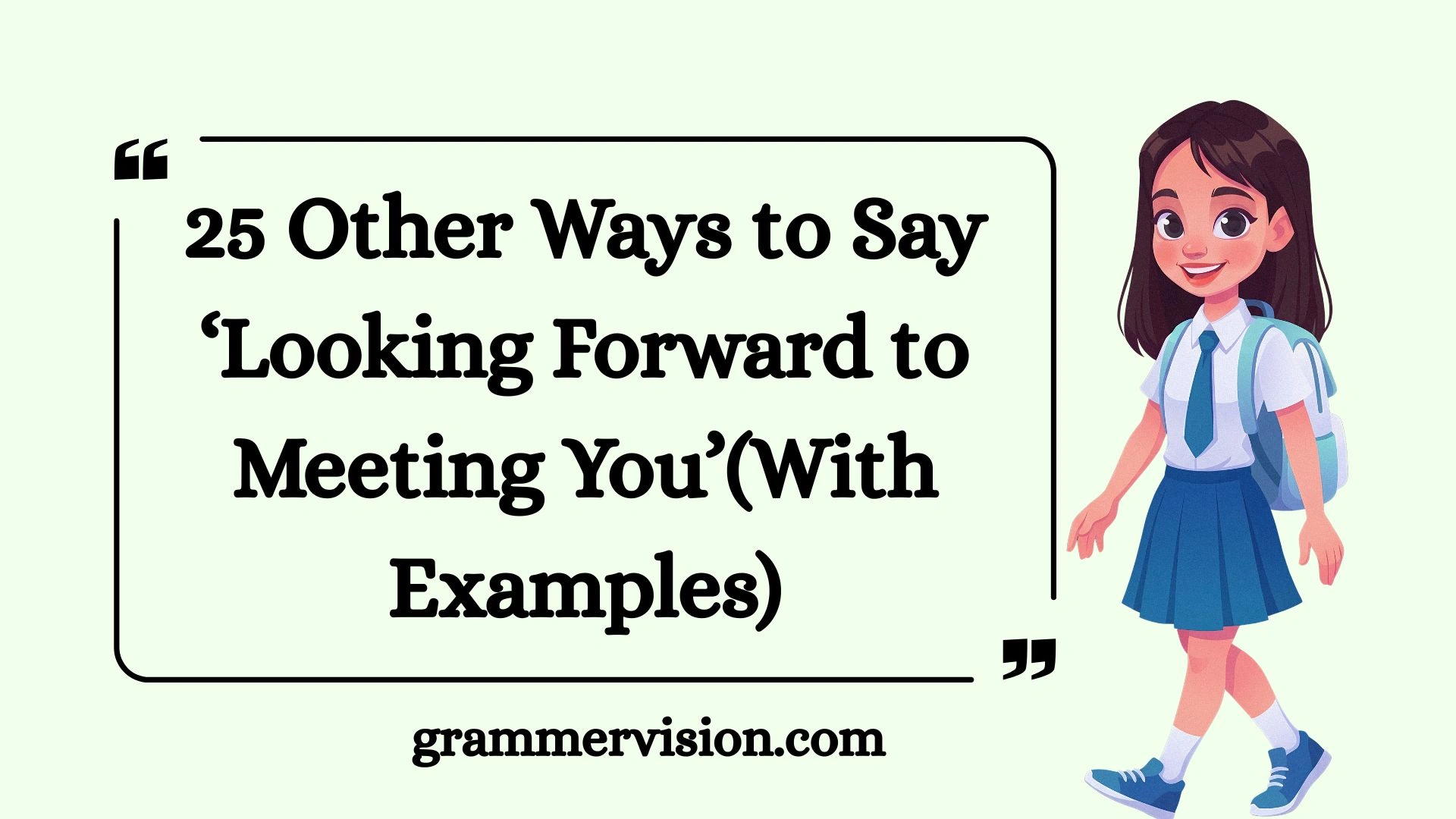
When you write I look forward to meeting you, it shows you are eager, polite, and excited, and using Other Ways to Say ‘Looking Forward to Meeting You’ helps improve your communication, tone, and professional expression in a more natural way.
When, you, write, I, look, forward, to, meeting, you’re, saying, eager, meet, someone, soon. It, shows, polite, and, excited, but, usingthe, same, phrase, over, and, over, can, make, your, message, sound, flat, or, repetitive, and, less, engaging. That’s, why, knowing, alternatives, looking, synonymsfor, other, ways, say, matters, in, professional, and, personal, communication. The phrase is, a, professional, way, to, express, excitement, anticipation, about, an, upcoming, interview, collaboration, or, meeting, and, it, sets, a, positive, tone, before, the, interaction, even, happens, while, showing, enthusiasm, respect, and, professionalism.
However, using, the, same, expression, repeatedly, in, emails, introductions, or, business, communication, can, feel, formulaic, and, less, natural. Choosing, creative, and, thoughtful, wording, allows, you, to, personalize, your, message, match, your, audience, and, create, a, more, memorable, impression, in, every, interaction. In, professional, communication, first, impressions, matter, more, than, ever, whether, it, is, emails, interviews, business, conversations, networking, or, formal, introductions.
The, Look, Meeting, You, is, respectful, and, widely, used, but, repeating, the, same, sentence, can, feel, predictable, or, generic, and, reduce, impact. That’s, why, learning, Other, Ways, Say, With, Examples, helps, you, stay, confident, polished, and, intentional, in, communication, and, improve, your, overall, skills. The, right, words, show, emotional, intelligence, and, strong, communication, skills, whether, you’re, confirming, job, interview, scheduling, LinkedIn, networking, or, choosing, a, tone, that, is, formal, warm, friendly, or, relationship-focused depending, on, your, goal.
What Does “Looking Forward to Meeting You” Mean?
This phrase means you are excited and expectant about meeting someone in the future. It shows politeness, interest, and positivity before a meeting happens.
When to Use “Looking Forward to Meeting You”
You use it when:
- You are emailing someone new
- You confirm a meeting or interview
- You connect with clients or colleagues
- You want to sound polite and professional
Pros and Cons of “Looking Forward to Meeting You”
Pros:
- Polite and professional
- Easy to understand
- Works in formal settings
Cons:
- Sounds overused
- Can feel less personal
- Lacks emotional warmth
Why We Need Alternatives to “Looking Forward to Meeting You”
Using alternatives helps you:
- Sound more authentic and human
- Build stronger emotional connection
- Avoid repetitive and boring language
- Match different tones (formal, friendly, casual)
1. Excited to Meet You
Scenario: Professional introduction before a business meeting or interview setting.
Examples:
- Hello John, excited to meet you at tomorrow’s conference.
- I’m excited to meet you during our scheduled interview session.
- We are excited to meet you at the onboarding event.
- She said she is excited to meet you next week.
- They are excited to meet you at the project kickoff.
Tone: Warm, energetic, and friendly.
Explanation
This phrase shows genuine enthusiasm and positivity. It feels more personal than formal phrases and helps create a friendly first impression that builds comfort and openness before the actual meeting happens.
When to Use:
Use it in both professional and casual settings when you want to sound genuinely enthusiastic.
2. Can’t Wait to Meet You
Scenario: Informal email or message before meeting someone you already feel connected with.
Examples:
- I can’t wait to meet you at the networking event tomorrow.
- She can’t wait to meet you during the workshop next week.
- We can’t wait to meet you at the celebration dinner tonight.
- I can’t wait to meet you after hearing so much about you.
- They can’t wait to meet you at the team gathering.
Tone: Very excited, friendly, and emotional.
Explanation
This phrase expresses strong anticipation and emotional excitement. It feels personal and warm, making it perfect for informal communication where you want to show eagerness and happiness about an upcoming meeting.
When to Use:
Use in informal or semi-formal communication with friendly tone.
3. Eager to Meet You Soon
Scenario: Professional email or scheduled appointment confirmation.
Examples:
- I am eager to meet you soon at the client briefing session.
- She is eager to meet you soon for the project discussion.
- We are eager to meet you soon during the training program.
- They are eager to meet you soon at headquarters visit.
- I remain eager to meet you soon in person.
Tone: Professional, respectful, and slightly formal.
Explanation
This phrase balances professionalism with enthusiasm. It shows interest without being overly emotional, making it ideal for business communication where respect and polite anticipation are important.
When to Use:
Use in formal workplace or corporate communication.
4. I’m Looking Forward to Our Meeting
Scenario: Email confirmation or professional scheduling message.
Examples:
- I’m looking forward to our meeting on Monday morning.
- She’s looking forward to our meeting with the board members.
- We are looking forward to our meeting next week.
- I’m looking forward to our meeting about the proposal.
- They are looking forward to our meeting at headquarters.
Tone: Formal, polite, and professional.
Explanation
This version is slightly more formal than the original phrase. It maintains professionalism while still showing interest and readiness, making it safe and effective for business emails and official communication.
When to Use:
Use in formal emails, reports, and professional messages.
5. Anticipating Our Meeting with Excitement
Scenario: High-level professional or client engagement communication.
Examples:
- I am anticipating our meeting with excitement next Thursday.
- She is anticipating our meeting with excitement and preparation.
- We are anticipating our meeting with excitement this Friday.
- They are anticipating our meeting with excitement at headquarters.
- I’m anticipating our meeting with excitement for collaboration.
Tone: Formal, polished, and enthusiastic.
Explanation
This phrase sounds refined and professional. It adds a layer of sophistication and emotional positivity, making it suitable for important business relationships where impression and tone matter greatly.
When to Use:
Use in formal business or high-stakes professional settings.
6. It Will Be Great to Meet You
Scenario: Friendly business introduction before first meeting.
Examples:
- It will be great to meet you at tomorrow’s orientation session.
- I think it will be great to meet you during the seminar.
- It will be great to meet you at the client introduction call.
- She said it will be great to meet you next week.
- It will be great to meet you at the networking event.
Tone: Positive, polite, and welcoming.
Explanation
This phrase feels warm and balanced. It creates a friendly expectation without sounding too emotional or too formal. It works well when you want to keep communication smooth, respectful, and naturally optimistic.
When to Use:
Use in professional introductions, meetings, and networking events.
7. I’m Thrilled to Meet You
Scenario: Excited introduction in email or event invitation.
Examples:
- I’m thrilled to meet you at the leadership conference tomorrow.
- She is thrilled to meet you during the award ceremony.
- We are thrilled to meet you at the annual gathering.
- I’m thrilled to meet you after your recent achievements.
- They are thrilled to meet you at the project launch.
Tone: Highly enthusiastic and positive.
Explanation
This phrase expresses strong excitement and admiration. It works best when you genuinely feel happy about meeting someone important or inspiring. It creates emotional impact and builds instant positive connection.
When to Use:
Use in formal events, special meetings, or inspiring introductions.
8. I Look Forward to Seeing You
Scenario: Friendly or professional follow-up message.
Examples:
- I look forward to seeing you at the meeting tomorrow morning.
- She looks forward to seeing you during the workshop session.
- We look forward to seeing you at the annual review.
- I look forward to seeing you at the client office visit.
- They look forward to seeing you next week.
Tone: Neutral, polite, and professional.
Explanation
This phrase is simple and widely accepted. It feels slightly less formal than “meeting you” and works well in both written and spoken communication. It helps maintain warmth while staying professional and clear.
When to Use:
Use in emails, scheduling messages, and general professional communication.
9. Can’t Wait for Our Meeting
Scenario: Informal confirmation with excitement.
Examples:
- I can’t wait for our meeting tomorrow at the café.
- She can’t wait for our meeting next Monday afternoon.
- We can’t wait for our meeting about the new project.
- I can’t wait for our meeting after your introduction email.
- They can’t wait for our meeting at the office.
Tone: Friendly, excited, informal.
Explanation
This phrase shows strong anticipation and excitement. It feels casual and personal, making it ideal for friendly communication. It helps you sound approachable and emotionally engaged in the upcoming meeting.
When to Use:
Use in informal emails, chats, or friendly business communication.
10. I’m Excited About Our Upcoming Meeting
Scenario: Professional yet enthusiastic business email.
Examples:
- I’m excited about our upcoming meeting with the investors.
- She is excited about our upcoming meeting next week.
- We are excited about our upcoming meeting with your team.
- I’m excited about our upcoming meeting to discuss ideas.
- They are excited about our upcoming meeting at headquarters.
Tone: Professional, positive, and energetic.
Explanation
This phrase combines professionalism with enthusiasm. It shows preparation and genuine interest, making it suitable for business contexts where you want to appear both respectful and engaged in the conversation.
When to Use:
Use in formal business communication and scheduled meetings.
11. Looking Ahead to Meeting You
Scenario: Polite email before formal introduction.
Examples:
- I am looking ahead to meeting you at the conference.
- She is looking ahead to meeting you next Thursday.
- We are looking ahead to meeting you during training.
- I’m looking ahead to meeting you for the presentation.
- They are looking ahead to meeting you at headquarters.
Tone: Formal and respectful.
Explanation
This phrase feels structured and slightly formal. It is less common but very professional. It shows anticipation in a calm and controlled way, making it suitable for business communication.
When to Use:
Use in formal emails, corporate introductions, and official messages.
12. It’s a Pleasure to Meet You Soon
Scenario: Polite introduction in professional settings.
Examples:
- It’s a pleasure to meet you soon at the event.
- She said it’s a pleasure to meet you soon.
- We find it a pleasure to meet you soon.
- It’s a pleasure to meet you soon during orientation.
- They said it’s a pleasure to meet you soon.
Tone: Formal, polite, and respectful.
Explanation
This phrase sounds courteous and refined. It emphasizes respect and appreciation. It is commonly used in professional introductions where politeness and positive impression matter greatly.
When to Use:
Use in formal meetings, introductions, and professional emails.
Read More.25 Other Ways to Say “Thank You for the Clarification” (With Examples)
13. I Await Our Meeting with Enthusiasm
Scenario: Formal corporate communication or executive email.
Examples:
- I await our meeting with enthusiasm next Friday.
- She awaits our meeting with enthusiasm and preparation.
- We await our meeting with enthusiasm at headquarters.
- I await our meeting with enthusiasm for collaboration.
- They await our meeting with enthusiasm this week.
Tone: Formal and sophisticated.
Explanation
This phrase sounds polished and professional. It shows controlled excitement in a refined tone. It is best for formal communication where you want to maintain dignity while still expressing anticipation.
When to Use:
Use in executive, academic, or formal business writing.
14. Really Looking Forward to Connecting with You
Scenario: Networking email or LinkedIn message.
Examples:
- I am really looking forward to connecting with you soon.
- She is really looking forward to connecting with you online.
- We are really looking forward to connecting with you tomorrow.
- I’m really looking forward to connecting with you at the event.
- They are really looking forward to connecting with you.
Tone: Friendly, modern, and warm.
Explanation
This phrase feels contemporary and approachable. It is often used in networking and digital communication. It creates a sense of openness and friendliness while still sounding professional and respectful.
When to Use:
Use in LinkedIn messages, networking, and introductions.
15. I’m Happy About Our Upcoming Meeting
Scenario: Friendly confirmation email.
Examples:
- I’m happy about our upcoming meeting next Tuesday morning.
- She is happy about our upcoming meeting with the team.
- We are happy about our upcoming meeting at headquarters.
- I’m happy about our upcoming meeting to discuss plans.
- They are happy about our upcoming meeting this week.
Tone: Positive and gentle.
Explanation
This phrase expresses calm positivity. It is not overly emotional but still warm. It works well when you want to sound friendly and comfortable without strong excitement or formality.
When to Use:
Use in casual professional communication or follow-ups.
16. Excited About Our Conversation Ahead
Scenario: Pre-meeting message for discussion-based meeting.
Examples:
- I’m excited about our conversation ahead tomorrow morning.
- She is excited about our conversation ahead this week.
- We are excited about our conversation ahead at the office.
- I’m excited about our conversation ahead regarding new ideas.
- They are excited about our conversation ahead next session.
Tone: Friendly and thoughtful.
Explanation
This phrase highlights dialogue instead of just meeting. It feels more engaging and collaborative. It is ideal when the focus is on discussion and idea sharing rather than formal introductions.
When to Use:
Use in brainstorming sessions, discussions, and creative meetings.
17. I Look Forward to Our Discussion
Scenario: Professional email before meeting.
Examples:
- I look forward to our discussion about the project plan.
- She looks forward to our discussion next Monday morning.
- We look forward to our discussion with your team.
- I look forward to our discussion during the call.
- They look forward to our discussion at the office.
Tone: Professional and neutral.
Explanation
This phrase is widely used in business communication. It focuses on the conversation itself rather than the meeting. It feels respectful and appropriate for structured discussions.
When to Use:
Use in formal emails, meetings, and business calls.
18. Can’t Wait to Connect in Person
Scenario: Friendly in-person meeting confirmation.
Examples:
- I can’t wait to connect in person at the event.
- She can’t wait to connect in person next week.
- We can’t wait to connect in person at headquarters.
- I can’t wait to connect in person during the meeting.
- They can’t wait to connect in person tomorrow.
Tone: Warm, friendly, and personal.
Explanation
This phrase adds emotional warmth and human touch. It emphasizes face-to-face interaction, making it ideal when transitioning from digital communication to real-world meetings.
When to Use:
Use in networking events, conferences, and personal meetings.
19. I’m Eager for Our Upcoming Interaction
Scenario: Formal business communication.
Examples:
- I’m eager for our upcoming interaction next Thursday.
- She is eager for our upcoming interaction with the team.
- We are eager for our upcoming interaction at the office.
- I’m eager for our upcoming interaction regarding strategy.
- They are eager for our upcoming interaction this week.
Tone: Formal and professional.
Explanation
This phrase is structured and slightly formal. It shows anticipation in a professional tone. It is ideal for corporate environments where polished communication is expected.
When to Use:
Use in corporate emails, reports, and formal messages.
20. Looking Forward to Our Face-to-Face Meeting
Scenario: In-person meeting confirmation.
Examples:
- I’m looking forward to our face-to-face meeting tomorrow.
- She looks forward to our face-to-face meeting next week.
- We look forward to our face-to-face meeting at office.
- I look forward to our face-to-face meeting in person.
- They look forward to our face-to-face meeting soon.
Tone: Clear, professional, and direct.
Explanation
This phrase removes ambiguity by emphasizing in-person interaction. It is useful when clarity matters. It also adds professionalism while confirming the physical nature of the meeting.
When to Use:
Use in formal scheduling and business appointments.
21. Excited to Finally Meet You
Scenario: First-time meeting after long communication.
Examples:
- I’m excited to finally meet you at the conference.
- She is excited to finally meet you after emails.
- We are excited to finally meet you this week.
- I’m excited to finally meet you in person.
- They are excited to finally meet you tomorrow.
Tone: Warm and emotional.
Explanation
This phrase shows relief and happiness after anticipation. It works well when you’ve been communicating for a while and are finally meeting in person. It feels sincere and personal.
When to Use:
Use in first-time in-person meetings after online communication.
22. I’m Pleased About Meeting You Soon
Scenario: Polite professional introduction.
Examples:
- I’m pleased about meeting you soon at the office.
- She is pleased about meeting you soon next week.
- We are pleased about meeting you soon during training.
- I’m pleased about meeting you soon for discussion.
- They are pleased about meeting you soon.
Tone: Formal, polite, and respectful.
Explanation
This phrase sounds courteous and refined. It is less emotional but very professional. It works well when you want to maintain respectful distance while still sounding positive and polite.
When to Use:
Use in formal emails and professional introductions.
23. Hoping to Meet You Shortly
Scenario: Scheduling or tentative meeting confirmation.
Examples:
- I am hoping to meet you shortly at the office.
- She is hoping to meet you shortly next week.
- We are hoping to meet you shortly during the event.
- I’m hoping to meet you shortly for discussion.
- They are hoping to meet you shortly soon.
Tone: Gentle and polite.
Explanation
This phrase sounds soft and uncertain but still positive. It is useful when meetings are not fully confirmed yet. It keeps expectations polite without pressure or urgency.
When to Use:
Use in tentative plans or flexible scheduling.
24. Looking Forward to Our In-Person Talk
Scenario: Informal but professional face-to-face meeting.
Examples:
- I’m looking forward to our in-person talk tomorrow.
- She looks forward to our in-person talk next week.
- We look forward to our in-person talk at office.
- I look forward to our in-person talk during meeting.
- They look forward to our in-person talk soon.
Tone: Friendly and conversational.
Explanation
This phrase feels natural and slightly casual. It emphasizes real conversation instead of formal structure. It helps build rapport and comfort before meeting.
When to Use:
Use in friendly business meetings and networking events.
25. I’m Delighted at the Thought of Meeting You
Scenario: Highly polite and expressive formal introduction.
Examples:
- I’m delighted at the thought of meeting you tomorrow.
- She is delighted at the thought of meeting you soon.
- We are delighted at the thought of meeting you.
- I’m delighted at the thought of meeting you at event.
- They are delighted at the thought of meeting you.
Tone: Formal, elegant, and warm.
Explanation
This phrase is elegant and expressive. It shows deep politeness and genuine happiness. It is best used in formal communication where you want to sound refined and respectful.
When to Use:
Use in high-level meetings, formal introductions, and professional writing.
Quick Comparison Table
| Phrase | Tone | Best For | Avoid In |
| Excited to meet you | Friendly | Casual/professional | Very formal legal writing |
| Can’t wait to meet you | Emotional | Informal chats | Corporate reports |
| Eager to meet you soon | Professional | Work emails | Casual texting |
| Looking forward to our meeting | Neutral | Business emails | Emotional messaging |
| Anticipating our meeting with excitement | Formal | Executive communication | Casual conversations |
FAQs
1. What does “I look forward to meeting you” mean?
It means you are eager, polite, and excited about an upcoming meeting or interaction, and it shows professional respect and positive communication tone.
2. Why should we use other ways to say it?
Using Other Ways to Say ‘Looking Forward to Meeting You’ helps avoid repetition, removes formulaic language, and makes your message more natural, personal, and engaging.
3. Is it okay to use this phrase in emails?
Yes, it is commonly used in emails, interviews, and business communication, but repeating it too often can make your writing sound predictable or generic.
4. How do alternatives improve communication?
Alternatives improve clarity, add warmth, and show emotional intelligence, helping you match the right tone for professional, formal, or friendly situations.
5. Where can I use these alternatives?
You can use them in job interviews, LinkedIn networking, business meetings, and casual introductions, depending on your goal and desired impression.
Conclusion
In everyday professional communication, choosing the right words for anticipation and excitement can strongly impact your first impression. Using Other Ways to Say ‘Looking Forward to Meeting You’ helps you sound more confident, polished, and intentional, especially in emails, interviews, and networking conversations. It also improves your ability to express respect, enthusiasm, and professional tone in a more natural way.
From my experience, even a small change in wording can completely shift how your message feels. Instead of sounding repetitive or flat, your communication becomes more warm, personal, and memorable. When you focus on thoughtful alternatives, you don’t just improve your writing—you also build stronger connections and leave a lasting positive impression in every interaction.