Behind every automated trade sits a specific model designed to act on a particular kind of market condition. This Skytexla.com Review breaks down the three execution models Skytexla runs, along with the live data infrastructure that feeds them.
Skytexla frames its entire approach around isolating market inefficiencies through mathematically driven models rather than relying on discretionary calls.
Understanding how each model is built, and what data it depends on, gives a clearer picture of what a Skytexla account actually does once it’s active.
What Are Skytexla’s Three Core Execution Models?
Skytexla organizes its strategy around three named models, each built for a different kind of market behavior, a structure any thorough Skytexla.com review would want to walk through individually.
Statistical arbitrage targets short-lived pricing gaps between correlated assets, aiming to profit as those prices converge back toward their historical relationship.
Market making takes a different approach entirely, continuously posting both buy and sell quotes to capture the spread between them. The third model, MEV extraction, operates within decentralized blockchain environments, focusing on how transactions are ordered to capture value from events like liquidations.
Is Statistical Arbitrage a Reliable Trading Approach?
Statistical arbitrage is one of the more established concepts in quantitative finance, built on the idea that historically correlated assets tend to revert toward their typical relationship after temporary divergence. Skytexla applies mean-reversion algorithms to identify these gaps across fragmented exchanges.
This model is designed around a delta-neutral risk profile, meaning positions aim to stay balanced against broad market direction rather than betting on prices moving up or down overall, a detail worth highlighting in any Skytexla.com review focused on risk design.
Holding periods for this model are extremely short, often under 500 milliseconds, which reflects how quickly these pricing gaps tend to close once identified.
Market Making and Continuous Liquidity
Market making differs from arbitrage in that it doesn’t wait for a specific mispricing to appear. Instead, Skytexla’s market making model continuously quotes both sides of the order book, aiming to profit from the natural spread between buy and sell prices.
Skytexla describes this model as using toxic flow analysis alongside dynamic inventory hedging, a combination designed to manage the risk of trading against better-informed participants.
This is a fairly standard concern in market making generally, and addressing it directly reflects a thoughtful approach to inventory risk, worth noting in this Skytexla.com review as a sign of considered design.
What Is MEV Extraction and How Does It Work?
MEV extraction is the most technically distinct of the three models, operating specifically within decentralized blockchain environments rather than traditional exchanges. Skytexla describes this model as optimizing transaction ordering to capture value from events like liquidations and flash-loan opportunities.
This is a genuinely modern corner of quantitative trading, reflecting how much market structure has evolved with the growth of decentralized finance, and it’s a segment worth flagging in any Skytexla.com review covering the platform’s full model range. The model’s holding period is described as sub-block, meaning positions resolve within the timeframe of a single blockchain confirmation.
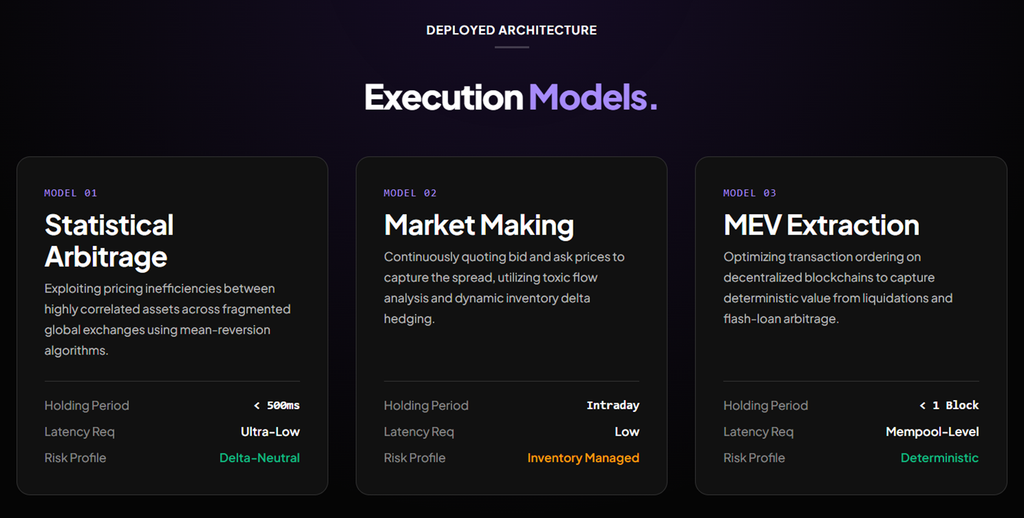
Skytexla’s Three Execution Models
| Model | Holding Period | Latency Requirement |
| Statistical Arbitrage | Under 500ms | Ultra-low |
| Market Making | Intraday | Low |
| MEV Extraction | Sub-block | Mempool-level |
The Infrastructure Behind Live Execution
Running these models in real time requires processing enormous volumes of market data continuously, a challenge this Skytexla.com review sees as central to the platform’s technical identity. Skytexla states that its systems handle millions of events per second, maintaining direct WebSocket connections to global matching engines rather than relying on delayed data feeds.
The platform’s routing layer calculates order book imbalance and tick-level volatility as conditions shift, letting the algorithms adjust resting limit orders and manage inventory risk within microseconds. This kind of high-frequency trading infrastructure is what separates a genuinely automated system from one that simply places occasional trades based on periodic checks.
A Look at Live Market Data in Practice
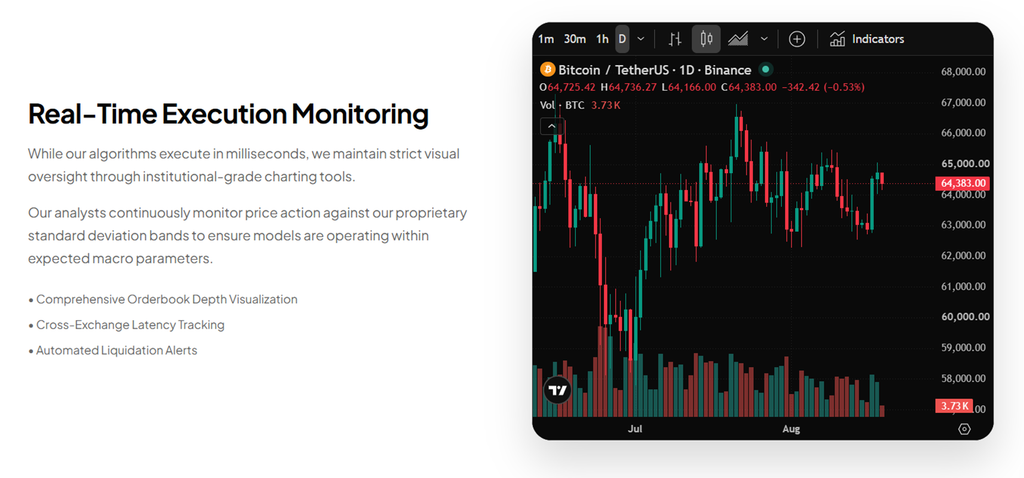
Skytexla’s public materials include a live L3 orderbook view for markets like BTC-USDT, showing price levels, order sizes, and cumulative totals pulled directly from exchange feeds.
Seeing this kind of granular data displayed openly gives a sense of the depth Skytexla’s systems are built to process continuously, and it’s the kind of detail that stands out favorably in a hands-on Skytexla.com review.
One simulated look at this live feed captured the experience well: “Watching the orderbook update in real time made the earlier talk about microsecond execution feel a lot more concrete, it wasn’t just a number on a page.” That kind of transparency, showing the actual data rather than just describing it, adds a layer of credibility to the platform’s technical claims.
How Fees and Access Tie Into the Models
Access to these execution models is tied to Skytexla’s account tier structure. Features like daily model reviews and institutional roundtable access become available at higher deposit levels, and spreads and margin efficiency also scale by tier. The platform adheres to rigorous statutory mandates, maintaining transparent operational standards that protect user assets across all trading tiers.
As with any account handling live capital, new traders typically go through a standard setup process before gaining full access, which is worth walking through directly with the Skytexla team to understand how it applies to a specific model or strategy focus.
Which Model Fits Which Kind of Trader?
Each of Skytexla’s three models suits a different kind of participant, a distinction any balanced Skytexla.com review should draw out clearly. Traders focused on relative value and shorter holding periods tend to gravitate toward the statistical arbitrage strategy, since it’s built around precise, fast-moving opportunities rather than broader directional views.
Market making tends to appeal to traders comfortable with continuous, intraday activity and inventory management, while MEV extraction is generally better suited to those already familiar with decentralized finance mechanics. Matching a model to a trader’s own comfort level and technical familiarity is a reasonable starting point before deciding where to focus.
Pros and Cons
Pros
- Three clearly defined models covering different market conditions and timeframes, anchored by a well-established statistical arbitrage strategy
- Live L3 orderbook data displayed publicly rather than described only in the abstract
- Direct WebSocket connections supporting genuinely real-time execution
- Delta-neutral and inventory-managed risk profiles built into the model design
- A modern MEV extraction model reflecting current developments in decentralized finance
Cons
- Traders newer to quantitative concepts may want to spend some time with the platform’s research library before diving into live execution
- The sheer volume of live data on display can feel like a lot to process at first glance
Frequently Asked Questions
What execution models does Skytexla offer?
Three named models: statistical arbitrage, market making, and MEV extraction within decentralized blockchain environments.
How fast does Skytexla’s statistical arbitrage model operate?
Holding periods for this statistical arbitrage strategy are typically under 500 milliseconds, reflecting how quickly identified pricing gaps tend to close.
Does Skytexla provide live market data?
Yes. The platform displays a live L3 orderbook feed for markets like BTC-USDT as part of its broader high-frequency trading infrastructure, showing real-time price levels and order sizes.
What is MEV extraction?
It refers to optimizing transaction ordering on decentralized blockchains to capture value from events like liquidations and flash-loan activity.
Is one execution model better than the others?
Each model is built for a different market condition and trading style, so the better fit depends on a trader’s own focus and familiarity with the underlying concepts.
Conclusion
Skytexla’s three execution models each target a distinct corner of the market, from short-lived pricing gaps to continuous liquidity provision to decentralized transaction ordering. Pairing that model diversity with a live, publicly visible data feed gives traders a clearer window into how the platform actually operates day to day.
This Skytexla.com Review finds the combination of named models, specific risk profiles, and real-time infrastructure to be a clear indicator of a legitimate platform and a genuinely detailed foundation for traders interested in a high-frequency trading infrastructure built around modern market structure.
Exploring each model’s mechanics directly with the Skytexla team remains the best next step for anyone deciding which approach fits their own trading style.
Also Read
- SN Meaning in Texting: What Does “SN” Mean in a Text?
- Jit Slang Meaning Explained: What It Means on TikTok?
- Financial Clarity Requires Emotional Honesty